
Chapter 11
The worst quarrels only arise when both sides are equally in the right and in the wrong.
—Winston Churchill
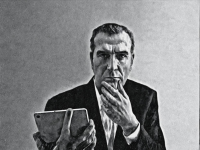
Chuck Berry
“Charles Edward Anderson Berry, born to a middle-class family in St. Louis in 1926, was a brown-eyed charmer who loved the blues and poetry with almost equal fervor.”
...
“ ‘The music played most around St. Louis was country-western and swing,’” Berry said in his autobiography. ‘Curiosity provoked me to lay a lot of the country stuff on our predominantly black audience. After they laughed at me a few times, they began requesting the hillbilly stuff.’ The sight and sound of a black man playing white hillbilly music, combined with Berry’s natural showmanship and his ability to improvise clever lyrics to fit any occasion, made him a top attraction with Missouri’s black community. But Berry had bigger aspirations; he wanted to make records.”
...
“In his 1958 masterpiece ‘Johnny B. Goode,’ Berry created the ultimate rock-and-roll folk hero in just a few snappy verses.
…
The song’s opening riff is a clarion call—perhaps the greatest intro in rock-and-roll history. It was played by Berry on an electric Gibson ES-350T, and it indeed sounded “just like a-ringin’ a bell.”
Tolinski, Brad and Alan di Perna. Play It Loud: an Epic History of the Style, Sound & Revolution of the Electric Guitar. Doubleday, Oct. 25, 2016, as excerpted from www.guitarworld.com/artists/how-chuck-berry-wrote-johnny-b-goode-and-created-first-rock-and-roll-guitar-hero
The great hall-of-fame musician Stevie Wonder once claimed: “There is only one true King of Rock and Roll. His name is Chuck Berry.”
Taken from: http://www.chuckberry.com/about
Louis Jordan
Louis Jordan is often referred to as “King of the Juke Boxes,” “Father of Rhythm & Blues,” and “Grandfather of Rock ‘n’ Roll.”
In New York City, Jordan played saxophone in a variety of Swing and Jazz bands before striking out on his own with his popular combination of danceable blues, inventive musical slang, and hot upbeat Jazz.
Louis Jordan topped the R&B charts for a total of 113 weeks, an unheard of accomplishment.
Louis Jordan and His Tympany Five launched more than 50 singles onto the R&B charts in the forties, including 18 songs that went to number one. Of particular note is Jordan’s 1946 hit “Choo Choo Ch’Boogie,” which topped the Billboard’s R&B chart for 18 weeks.
Jordan and his bandmates also had 15 songs that landed on the pop charts, including “Caldonia.” “Caldonia Boogie” was number one on the R&B charts for seven weeks in 1945.
Caldonia was so well received and popular that contemporaneously with Jordan’s version, band leaders Woody Herman, and separately Erskine Hawkins, performed their own renditions, with Herman’s being released earlier than Jordan’s version while also charting higher! Other iconic artists (B. B. King, Willie Nelson, Van Morrison, and Benny Goodman to name a few) have taken their own turn at recording “Caldonia.”
Success in music is similar to success in other businesses; it draws lots of attention to you and your work and then others start making claims against you. In the case of “Caldonia,” one of the signature lyrical phrases was supposedly copied from another artist’s prior work, with the case eventually being heard in the U.S. Supreme Court! The final result of the lawsuit was that Jordan’s ex-wife Fleecie Moore retained ownership of “Caldonia.” I wonder if during the deliberation before the justices, the song may have been played in the courtroom. If so, what fun!
Louis Jordan was inducted into the Rock and Roll Hall of Fame in Cleveland, Ohio, in 1987 in the Early Influencer category.
In 2004, Rolling Stone magazine named him one of the 100 Greatest Artists of All Time.
Louis Jordan is highlighted on a United States Postal Service stamp issued in 2008.
Finally, the rock and roll great Chuck Berry paid tribute to Jordan with this simple statement: “I identify myself with Louis Jordan more than any other artist.”
The quote from Berry is sourced from:
Chilton, John, Let the Good Times Roll: The Story of Louis Jordan and his Music, University of Michigan Press, 1997, p. 123.
Chapter 12
Reverse Engineering aims to dismantle the various components of the whole to understand how it works. The engineer maintains the option to reconstruct the original in a way that offers new functionality and provides total control of the rebuilt item. This intrusive, laborious endeavor applies to more than software. Determination of the cause of the 1981 Hyatt Regency walkway collapse in Kansas City and the partitioning of the fundamental elements of human DNA are two examples.
In January 2019, the U.S. National Security Agency (NSA) announced that their internal-use-only reverse engineering tool Ghidra would be open sourced in March 2019 and therefore be available for all to use at no charge on MacOS, Windows, or Linux systems. Ghidra contains over 1 million lines of code. Other than being a tool that was deployed by a U.S. Federal Department for doing classified work, Ghidra distinguishes itself from competing platforms in that it was designed from the outset to be customizable and contain features that enable collaborative projects.
—Newman. “The NSA Makes Ghidra, a Powerful Cybersecurity Tool, Open Source”. March 5, 2019. www.wired.com/story/nsa-ghidra-open-source-tool
Here is information on some specialized elements of computer hardware.
BIOS (Basic Input Output System) technology resides as very small firmware on a computer’s motherboard. It activates before the much heavier weight operating system to make sure, among other things, that the computer hardware components are available, working, and configured before the operating system kicks into gear.
In the 1980s, Phoenix Technologies reverse-engineered IBM’s BIOS technology using a “clean room” technique to avoid violating intellectual property laws in effect at the time. One Phoenix team fully studied the functional structure of IBM’s BIOS. A second—completely separate—team with no knowledge of IBM’s BIOS then simply looked at the functional list of the first team and designed from scratch a BIOS to match that functionality. The Phoenix BIOS could be run on IBM compatible PCs and therefore competed with IBM’s own PCs.
www.computerworld.com/article/2585652/reverse-engineering.html
On October 28, 2016, the U.S. federal government published clarified rules that permit exemptions to the Digital Millennium Copyright Act.
www.federalregister.gov/d/2015-27212/p-27
See also:
www.zdnet.com/article/us-dmca-rules-updated-to-give-security-experts-legal-backing-to-research
Generally, exemptions that permit a legal reverse-engineering of software are
- Activities of nonprofit libraries, archives, and educational institutions
- U.S. federal and state efforts related to infosecurity or intelligence
- Interoperability activities
- Certain encryption efforts
- Efforts related to restricting access of certain Internet content to minors
- Activities related to protecting personal and private data
- Certain security testing of computers
Chapter 14
Ildefonso took advantage of the improved technology projected to exist in this novel in order to hack the satellite. The fortunate-for-him part is that those passcode generations run over many cycles, and those specialized memory EEPROMs benefit from improved shielding, faster combined erase and write operations, and better wearing algorithms in the late 2030s. Absent those benefits, password creation becomes unreliable because sections of the EEPROMs would have suffered permanent hardware degradation. These features, operational over a wide range of temperatures, became available in the novel just in time for LandSat-12’s manufacture.
If a bug is found in firmware programmed into an FPGA then it can be rectified by a firmware update. However, if the Trojan or backdoor is present in the silicon itself, then there is no way to remove the bugs other than replacing all the affected silicon chips, as has happened several times with bugs found in Intel CPUs. The cost of such an operation is enormous and can seriously affect an organization’s revenue.
—Skorobogatov,, Sergei and Christopher Woods. “Breakthrough silicon scanning discovers backdoor in military chip,” Cryptographic Hardware and Embedded Systems Workshop (CHES 2012), pp. 23–40, Sep. 2012, Leuven, Belgium, 2012.
At www.johnjamesonbooks.com, a single color schematic diagram will depict the ground-to-satellite communication and password processing scheme described in this chapter.
Chapter 15
Van Gogh, Picasso, and Goya (among other famous artists) created masterpieces which actually contain another painting in a layer underneath the famous visible one.
Modern X-ray and infrared technologies can reveal these hidden paintings. There are a variety of reasons why the artist concealed or covered up other work:
The covered up creations could have been done early in the artist’s career, and may reflect a lower level of complexity that the artist did not want the public to see.
The hidden art may also simply be proof of the limited resources of the struggling young artist. The budget did not allow purchasing a new blank canvas, so the older one was reused.
Some paintings, which may have become politically controversial over time, could have subsequently been painted over to avoid criticism.
In other cases, the first layer may have been an early attempt that was later improved upon, by painting directly over it with a change in color choice or a change in the relative sizes or arrangements of the subjects in the scene.
—Leslie, Tim. “Before and after: X-ray paintings by Picasso, Van Gogh to reveal their surprising stories,” Australian Broadcasting Commission, 3 July 2014, www.abc.net.au/news/2014-06-27/before-and-after-a-history-of-hidden-paintings/5536130
A real-time current terrorism conflict tracker map: “Global Conflict Tracker”. Council on Foreign Relations, www.cfr.org/global-conflict-tracker/?category=us
Hezbollah built tunnels that cross into Israel from Lebanon.
Dwyer, Colin and Bill Chappell. “Israel’s Army Says It Found Tunnels Dug By Hezbollah Beneath Border With Lebanon”. National Public Radio, 4 Dec. 2018, www.npr.org/2018/12/04/673181288/israels-army-says-it-found-tunnels-dug-by-hezbollah-beneath-border-with-lebanon
The satellite image discussed in this chapter is adapted from Landsat 8, captured August 2015. The original image has about 83 megapixels.
The latitude and longitude revealed by Tanaka in the satellite photo are denoted in the DD coordinate notation and truncated at two decimal places for the purposes of the novel. Kafr Kila is sometimes written as Kafr Kela.